Showing posts with label surrealism. Show all posts

Tuesday, July 19, 2022

The Changeling by Joy Williams


Talk about an ambivalent reaction to a book. There were so many things about Joy Williams’ The Changeling that I loved and quite a few that I didn’t like at all.

Positives:
Fabulous imagery, often very disjointed and yet logical in its odd associations, a psychological weirdness that reminded me of Shirley Jackson. A still quite contemporary-seeming American surrealism that was often deeply convincing.
Propulsive, unforgettable sentences with a relentless drive.
An interest in psychological perverseness and the fringes of human complexity.
A vivid collapsing of the boundaries between the human and the animal.

Negatives:
A lack of narrative energy and focus, despite the intense energy of the sentences. Events in the book meander more than develop, and at times the momentum of the narrative comes nearly to a complete stop while the powerful sentences just kept going. There are significant stretches of the book that feel like the story is going nowhere.
Unconvincing portrayals of the real, especially when it comes to the nature of events. The “real world” in the book is at times at odds with the “dream world” and at times seems to blend with it. While that’s interesting when I put it that way, in practice the passages that seemed to be taking place in reality were often not convincing and relied boringly on coincidence and the unlikely. “Maybe it’s all a dream” is both unconvincing in terms of the narrative and also a boring cliché.

I also had mixed feelings about the stream of consciousness passages, which had a sort of “look what I can do” showiness that felt imitative and not essential.

Add it all up, I guess, and there’s a mix of less convincing story and narrative elements with fascinating writing and world view.

Sometimes I read the reviews on Amazon of ordinary people who write responses to an author or book, and I found all sorts of people saying things not all that different from what I’m saying about not only this book but others of hers as well: brilliant writing and strange thinking but unfocused stories that people lose interest in.

So my conclusion: at best, brilliant. At other times, an unconvincing pile of words that’s not headed anywhere. And no, I’m not saying something here that’s anti-experimental fiction. Experimental fiction still usually has narrative drive, and this book isn’t especially experimental anyway. The introduction to the 30th Anniversary Edition comes from Rick Moody; Williams’ work seems most connected to the context of later 20th century American realism even while the realism of this book is very thin.

Anyway, if you’re a fan, help me understand what you like about Joy Williams’ work.


Sunday, November 11, 2007

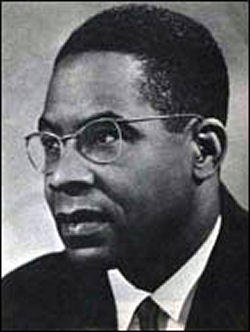
Aime Cesaire on surrealism


From an interview of Aime Cesaire by Rene Depestres at the Cultural Congress of Havana, 1967

A.C.: I don’t deny French influences myself. Whether I want to or not, as a poet I express myself in French, and clearly French literature has influenced me. But I want to emphasize very strongly that—while using as a point of departure the elements that French literature gave me—at the same time I have always strived to create a new language, one capable of communicating the African heritage. In other words, for me French was a tool that I wanted to use in developing a new means of expression. I wanted to create an Antillean French, a black French that, while still being French, had a black character.

R.D.: Has surrealism been instrumental in your effort to discover this new French language?

A.C.: I was ready to accept surrealism because I already had advanced on my own, using as my starting points the same authors that had influenced the surrealist poets. Their thinking and mine had common reference points. Surrealism provided me with what I had been confusedly searching for. I have accepted it joyfully because in it I have found more of a confirmation than a revelation. It was a weapon that exploded the French language. It shook up absolutely everything. This was very important because the traditional forms—burdensome, overused forms—were crushing me.

R.D.: This was what interested you in the surrealist movement...

A.C.: Surrealism interested me to the extent that it was a liberating factor.

R.D.: So you were very sensitive to the concept of liberation that surrealism contained. Surrealism called forth deep and unconscious forces.

A.C.: Exactly. And my thinking followed these lines: Well then, if I apply the surrealist approach to my particular situation, I can summon up these unconscious forces. This, for me, was a call to Africa. I said to myself: it’s true that superficially we are French, we bear the marks of French customs; we have been branded by Cartesian philosophy, by French rhetoric; but if we break with all that, if we plumb the depths, then what we will find is fundamentally black.

R.D.: In other words, it was a process of disalienation.

A.C.: Yes, a process of disalienation; that’s how I interpreted surrealism.

R.D.: That’s how surrealism has manifested itself in your work: as an effort to reclaim your authentic character, and in a way as an effort to reclaim the African heritage.

A.C.: Absolutely.

R.D.: And as a process of detoxification.

A.C.: A plunge into the depths. It was a plunge into Africa for me.

R.D.: It was a way of emancipating your consciousness.

A.C.: Yes, I felt that beneath the social being would be found a profound being, over whom all sorts of ancestral layers and alluviums had been deposited.