Showing posts with label rock and roll. Show all posts

Thursday, May 1, 2025

My Award Winners in Please Kill Me: The Uncensored Oral History of Punk


I first read Please Kill Me: An Oral History of Punk by Gillian McCain and Legs McNeil soon after it came out in 1996. I was very interested in the environment and people in it, but I don’t recall thinking about it much as a piece of writing.

Having just reread it in an e-copy of the 20th Anniversary Eidtion (with an updated index of names) because my friend Adam Deutsch was reading it, it now strikes me as one of the best books about rock and roll that I know, constantly fascinating and energetic. It doesn’t have much to say about the music as such, but it captures the personalities and the culture of U.S. East Coast (and some British) punk with a level of perceptiveness that comes from the people involved in that culture.

I was making a lot of lists in my head as I read it, just for my own fun and interest. So here are the people in the book who are my Award Winners in various categories. Like all lists, don’t even try to take it too seriously.


BIGGEST JERKS

Lou Reed
Johnny Rotten
“Handsome” Dick Manitoba
(Controversial Honorable Mention: Patti Smith)


BIGGEST GENIUS

Iggy Pop


MOST COMPLETELY DOOMED DRUG ADDICTS

Connie Gripp
Nancy Spungen
Johnny Thunders
Sid Vicious
Jerry Nolan


HOW CAN THEY POSSIBLY STILL BE ALIVE IN 2025?

Iggy Pop


MOST INSCRUTABLE

Patti Smith
Richard Hell


MOST DANGEROUS TO OTHERS

Dee Dee Ramone
Connie Gripp
“Handsome” Dick Manitoba
Jerry Nolan


BEST INSTRUMENTALISTS
Johnny Thunders
Robert Quine


SADDEST STORIES

Sid Vicious
Nancy Spungen
Connie Gripp
Nico

BIGGEST MANIACS

Dee Dee Ramone
Connie Grip
“Handsome” Dick Manitoba
Iggy Pop
Stiv Bators


SANE AND REASONABLE PEOPLE

Deborah Harry
Wayne Kramer
Patti Smith (nearly)
Richard Hell (nearly)

I’m sure I’m missing some names that should be on this list, and some categories too, but that’s what I have so far. There are a lot of lesser known names that might reasonably be featured here too.

Friday, April 25, 2025

RIP David Thomas


The band Pere Ubu was unquestionably my introduction to the concept of an avant garde in art or any other form. I was a junior in college when my boss put on the record Dub Housing in the campus record store where I worked.

I knew some of the music of John Coltrane and had occasionally heard what I then thought of as “20th century classical music” that sounded cool and strange, but I had never encountered the concept of “avant garde” in relation to them. I had written papers in high school and college about James Joyce and William Faulkner, but “avant garde” was not a term I saw applied to their work either. I’d never heard of Dada. I knew the word “surreal” as being about weird dreams but not about its connection to the concept of an avant garde.

Listening to Dub Housing, I had one of those epiphanies that are very real sometimes. “I don’t understand music anymore at all,” I said to myself. I was only several years into being aware that there was such a thing as punk music. “What kind of music could this possibly be?”

My response to not understanding the album was to buy it and take it home and soon pick up other albums by the band as well. It turned out that some of my musician friends at college, Andy Rosenau particularly, already knew about the band, but we had never talked about them to that point in my life.

This wasn’t the first time that I had become fascinating by something in literature or music or art that I didn’t understand. But it was a turning point because I became conscious that I was fascinated by literature and music and art that I “didn’t understand.” It was a feeling of being riveted. Why didn’t I understand? Why was it so interesting?

It wasn’t long after that when I came across a copy of the New Directions book Ubu Roi, the play by Alfred Jarry, one of the foundational avant garde texts, as is well known. From then on, I was on my way to a much broader set of interests than I had known about before.

RIP to David Thomas (1953-2025), one of the most unique and powerful musicians of my lifetime.


Wednesday, January 29, 2025

A Secret History of 1968 by Ryan H. Walsh


 I was fascinated by the chapters (three of them) and other occasional mentions of Van Morrison in Astral Weeks: A Secret History of 1968, but the rest of this book mostly bored me. I guess the chapter on The Velvet Underground in Boston, and occasional paragraphs on Jonathan Richman, and a few of the other stories, were okay. But the narrative of counterculture Boston in 1968 (and before and after) that is the overall focus of the book ran thin quickly.

The many chapters on Mel Lyman and the Fort Hill Collective were tedious and served mainly as a reminder that for a certain portion of the counterculture, the difference often got lost between being a revolutionary and being a self-absorbed asshole (usually white male), a description that fits Van Morrison well enough too, but at least Morrison had a real genius to develop and protect. It was hard for me to find anything of much interest in the portrayal of Lyman, who started a local newspaper and regularly declared himself God in it, facts that are more interesting than any elaboration of what happened as a result. His self-proclaimed Messiahood seems to have allowed him to make wild and ludicrous statements but rarely insightful ones. It’s hard to know what to think about the people who followed him. As the cliche goes, I guess you had to be there?

Those who love the history of the counterculture, or of Boston, or both together might find the mix of nostalgia and criticism running through this book enjoyable, but I kept wanting to get back to Morrison, wacko that he is. Given how the book is organized, Walsh himself seems to have realized that Morrison is the most interesting part. Morrison’s visionary genius and manic lunacy both come across clearly. His time in Boston was a particularly rough portion of his career as a musician, and he came out of it with one of the greatest and most unique records in the history of rock and roll, if you think Astral Weeks is rock and roll at all, something Morrison himself has always contested, like he contests just about everything anyone ever says to or about him.

I was glad also that the book gave me a chance to understand the point of view of his wife during that time, Janet Planet (real name Janet Rigsbee). I used to sympathize with the romantic melancholy on display in Morrison’s work after the breakup of their marriage, and still love how it sounds in the songs, but after reading this book, my sympathy is entirely with her. “Being a muse is a thankless job, and the pay is lousy,” she’s quoted as saying, and it’s clear that she knows all too well what she’s talking about.

Thursday, December 29, 2022

My Night With Alex Chilton


(This essay was originally published in the online magazine Celebrity Brush in February 2014. It no longer seems to be available online so I’m reprinting it here.)

Alex Chilton was appearing at the 9:30 Club in D.C. and I had to go.

A year or two earlier I had discovered Chilton’s music by finding a record called Big Star’s Third (known now usually by its originally intended title, Sister Lovers) in one of the many record stores I frequented in the mid-80s. I had never heard of him but the record had a mysterious dark blue cover with a drawing of Chilton’s face in moody silhouette. The back cover chatter about a “lost classic” hooked me. The record had somehow escaped being picked out of a bin at a time when all the Big Star records (The Velvet Underground records too) were out of print. It was an era when there really were lost classics.

Other friends of mine turned out to own the other two Big Star records and soon a lot of us were Big Star fans. In 1985 and 86 Chilton released two new EP’s. Several of the new songs, “Lost My Job,” and “No Sex,” were tightly distilled examples of later-Reagan-years dead end malaise. Between working a couple jobs I couldn’t stand, getting out of a relationship with a girlfriend who had a drinking and cocaine problem, and building a drinking problem of my own, I had plenty of malaise. I was a writer but didn’t know anyone in any writing communities yet. Nothing was happening. I was developing a public patter of sardonic morbid bitterness that I had translated into occasional short stories and failed novels.

Only one friend, my housemate at the time, Ginette (she was a Chilton fan too), went with me to the show. I’m sure it must have been on an early-in-the-week weeknight. There were maybe twenty people in the audience. This was the old, smaller 9:30 Club on F Street with its not large main stage and only one tiny back bar, but it was still painfully empty. Chilton was a rock and roll legend, but that night it seemed he was a secret. Ginette and I didn’t mind. Chilton and his two other band members played a solidly rocking show for the few of us milling around, a set in which his onstage grumpiness chimed well with the cynicism of his best recent songs.

When the show was over and Chilton had disappeared from stage, Ginette said, “Let’s go talk to him.”

I was startled and asked her what made her think he’d want to talk to us. She shrugged. “There’s nobody here. He’s not likely to be talking to anybody else.”

I doubt I was persuaded, but I went along with it. We walked downstairs to where the musicians were. A few people were packing up equipment. Chilton was sitting on a bench, and we walked up to him. Ginette started talking.

Chilton was laconic in speech and languid in motion, very Southern, very unlike our own DC mile-a-minute pacing. His face was acne-scarred and pockmarked. He was happy to talk to Ginette. That was no surprise, it occurred to me quickly. Most guys I knew wanted to talk to Ginette. She was half European (Swiss, I think) and half South American (Brazilian, I think, but this many years later that’s just a guess). She was a guitarist who knew a lot about music and who could talk about books and politics and who liked a good party. She was small and shapely and had constantly curious eyes that seemed always to be asking everyone, “Just who are you?”

The absent part of all this is that I don’t remember much of what we talked about. It wasn’t that memorable. Almost everybody had cleared out by the time Ginette said, “Want to get stoned with us?”

Chilton did indeed want to get stoned with Ginette, and if I was part of the bargain, that was okay.

The pot, however, was back in Ginette’s room at our group house. We had gone to the show on the Metro but it was closed by then. Chilton offered to drive us home.

And boy did he ever have an old, shitty fake-wood-paneled station wagon. He had been driving it on tour but said he didn’t expect it would last long. In the car, we talked about places he had been eating on the tour and how dull the traveling had been. He talked a bit about how at 17 in 1967 he had gotten rich from the Box Tops’ “The Letter” but was out of money by 1970.

And that’s how I ended up at my own house, spending as few hours drinking beer and smoking pot with Alex Chilton.

I don’t remember much about the conversation there either; places he had traveled, guitar equipment, musicians he knew. What has stuck with me is not anything he said but who he was; a relaxed, vaguely grim guy in a flannel shirt, jeans, and boots, who liked to play music but had gotten tired of touring, who had car trouble and was often bored and was happy to drink and smoke dope with strangers a dozen years younger. An unremarkable, cynical man in his mid-thirties who had been the driving genius behind three of the best albums in rock and roll history. Those albums were out of print and he had just played a show for twenty people.

I ought to have found the situation depressing, but I didn’t. Someone could do something artistically essential yet still be wandering around in the evening looking for whatever was happening, like I was. As if being an artist or musician or writer wasn’t this glamorous other thing for special people but was something anybody—even me—could do. I didn’t mind the idea that you could do something great and it wouldn’t change much about the way you lived.

Chilton left eventually, and I went to bed. Except that he was Alex Chilton and had taught me, indirectly, a crucial lesson about what it meant to be an artist, there was nothing about the evening any different than many nights I went to shows and ended up with people at my house. The fact that the evening was so perversely ordinary has remained for me its main fascination.

Tuesday, March 31, 2009

What is the first rock and roll song?

Spring break here, and time for some less than crucial trivia. Question: "What is the first rock and roll song?" I don't say that the following is a perfect answer, or one that entirely meets the spirit of the question. I say only that given the facts, it is the most historically accurate answer.

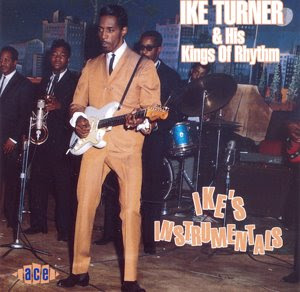
Answer: The term "rock and roll" was used by black Americans as a slang word for dancing and sex. The musical style that later became known as rock and roll was invented by black musicians by mixing influences from various genres (blues, jazz, country, folk, gospel, r ‘n’ b) in a way that involved only a slight variation on a number of earlier precursor songs from those genres. Ike Turner's "Rocket 88" was the first recorded song to feature these variations. Recorded in early 1951 by Jackie Brenston and his Delta Cats, it featured Turner’s band under a different name with Brenston singing. Brenston received the song writing credits although the tune was probably primarily Turner’s.

However, at the time that song was made, it wasn’t called "rock and roll." As far as the historical record notes, Alan Freed was the first to use the term "rock and roll" to identify the style of music as a genre. Freed promoted the concept for what is considered the first rock and roll concert on August 21, 1952 at the “Moondog Coronation Ball” held at the Cleveland Arena.

Bill Haley, with songs like "Rock Around The Clock," was the first musician to consciously present his music as something called rock and roll, although the songs themselves were relatively pale translations of the more powerful music being made by black musicians. Still, many white people considered rock and roll to be black music and condemned it as such, especially after Elvis Presley's first singles, which is ironic but not surprising given that Presley showed that white people could play excellent music in that style.

Identifying the first rock and roll song is only partly a question of historical fact. It’s also a question of culture and value.

If you say that it's crucial to note the first appearance of the style, even if no one at the time thought they were hearing rock and roll, then "Rocket 88" seems the answer, an answer which has the further value of not denying the centrality of African American culture to rock and roll. But if you answer the question by saying that the issue is the first record that people thought, at the time, was rock and roll, then the answer is Haley’s 1952 release “Rock The Joint,” a minor hit.

Once and for all, that's my answer.